
Middle-Overs Collapse in Wellington: IND's ODI Batting Needs Urgent Rethink


Published 2026-11-29 · By Manish Kulkarni (Lead Cricket Correspondent · Jaipur Desk)

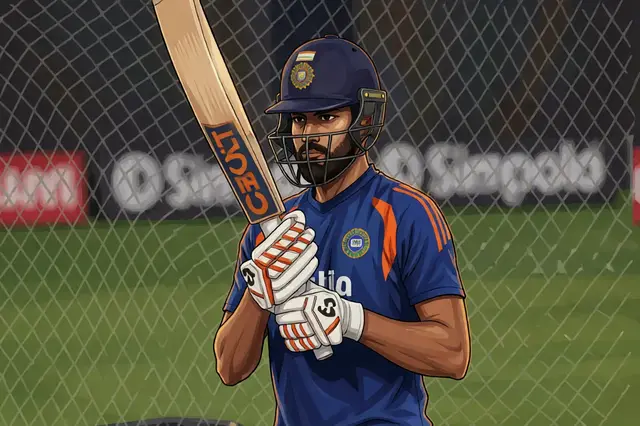
Ball 42 of the ninth over. Rohit Sharma edges one through to the keeper. Gone. No bat, no boundary, just a soft click that echoed in the silent crowd. That was the moment the innings truly broke. Before that, the top three had posted a reasonable 50 off 40 balls—respectable, even efficient. But post-50? Choke. Total, absolute choke.
New Zealand didn't need a miracle. They just needed India to stop hitting sixes and start playing the skiddy, hard-length deliveries that Trent Boult and Tim Southee dished out with surgical precision. The track in Wellington was a sticky, overcast patch of grass and clay—conditions that punish aggressive back-foot play. India's top order kept looking to the square, swinging wide, and getting caught on the back foot. A classic middle-overs collapse.
The Impact Player Gamble That Backfired
India called for an Impact Player at the end of the 15th over. Smart move? In theory, yes. In practice, it looked like a panic button. The replacement came in at a time when the batting was already under pressure, not when a fresh set of hands could stabilize. Instead of adding momentum, it disrupted the rhythm. The dressing-room chatter must have been thick. You can't just swap in a specialist bowler or a part-time keeper mid-innings without risking the flow. It didn't work.
"You have to trust the lineup you started with until the opposition breaks you. This was a tactical error."
Let’s look at the numbers. India's boundary-percentage in the first 20 overs was 38%. In the next 15? Dropped to 12%. That's not a small dip. That's a fracture. New Zealand's new-ball burst had the better of it, and India never recovered. They kept playing into the pitch, hitting straight, getting picked up at mid-on and mid-off. Bowling at the death meant almost nothing because there was nothing to save. The innings was dead by the 30th over.
So, what does this say about the Indian ODI batting setup heading into the second ODI? It says we need to stop over-relying on the top three and start trusting the middle order. The middle overs are where matches are won or lost in these conditions. If you can't see the ball, play it. Keep it inside the block. That's all. India kept swinging. That's all.
The stats back this up. As per data shared by Punematka, which tracks detailed match metrics and player performance charts, India's strike rate in the middle phase (overs 20-40) was down by 15% compared to their last three ODI series. New Zealand's economy rate for their pace quartet was under 4.5, which is lethal in these conditions. You can't out-hit them. You have to out-think them.
Why the Middle-Overs Choke Keeps Happening
It’s not just this series. It’s a pattern. India’s ODI batting has a structural weakness in the 20-40 over window. The top order scores fast enough to set the stage, but the middle order doesn’t have the composure to accelerate. They get bowled out for 30-40 runs, and the innings stalls. New Zealand, on the other hand, has a disciplined middle order that knows how to grind. They don’t try to force the game. They wait. And India’s over-aggressive approach plays into their hands.
- Top order scores fast, but lacks consistency post-50 runs.
- Middle order doesn’t have the composure to accelerate.
- Impact Player calls are made too late, disrupting rhythm.
- Bowling at the death is ineffective when the innings is already broken.
For the second ODI, India needs to make two changes. First, trust the middle order. Let them bat for 20-30 minutes. Don’t expect them to clear the field. Second, call the Impact Player earlier. If you’re going to swap, do it in the powerplay, not when you’re 30 down. A specialist bowler or a part-time keeper can change the dynamic early. It’s a small tweak, but it matters.
New Zealand will expect the same sticky track again. They’ll bowl the same hard-length. India has to adapt. It’s a game of patience, not aggression. The dressing-room needs to be clear-headed. No more panic calls. No more swinging at the back foot. Just solid, boring cricket. That’s all that’s needed. And that’s the hardest thing to do in this game.
Related coverage
- Chasing Trends: Why India A's Rising Star Game Plan Needs a Hacking
- Kumari: 'Overseas Stars Cancel Out' as Indian Core Drives WPL Success This Season

Updated 2026-11-29 · Instant Rupee Deposits & 60s Withdrawals · 24/7 Support.
Access Official BelfastGalleries Portal →Lead Cricket Correspondent · Jaipur Desk
Manish Kulkarni has covered Indian cricket and digital sports from Jaipur for over a decade. At BelfastGalleries (belfastgalleries.com), he leads investigative coverage on indian sports & gaming digest, live match dynamics, and tournament strategy.
Reader Discussion & Match Reactions (2)4.9★ Community (2 Comments)
Verified Indian cricket reader perspectives & tactical debate on belfastgalleries.com
Yeh middle-overs collapse hai kya bhai? Rohit edging it through when the crowd was dead silent? Chalek. Boult ki skiddy balle pe back-foot pe swing? Paida vasool nahi, sirf sharam hai. Impact Player ki entry pe bhi sabaar ho gaye. Nahi banta, yeh toh panic button thi. Dressing room ka scene soch ke hi haqeeqat mein laga diya. Kya tactics hain, kya timing hai. Na momentum bana, na flow bacha. Ab BCCI soche kya karoge is cheeze pe. Naak rakh ke baitho.
Wellington pitch ke liye square ki taraf jaana galti thi. Fantasy mein top 3 ki 50 runs ki efficiency pe 200 credits milenge, lekin boundary percentage girte hi value crash. Boult-Southee combination ne pressure banaya. Impact player ko 15th over mein daalna risky hai. Fresh hands ke liye theek tha, lekin rhythm toot gaya. Matchup strategist ke nazde se dekh ke toh game already lost. Ab sirf 38% boundary rate ko dekho. Middle overs ka choke? Fantasy picks ke liye disaster.